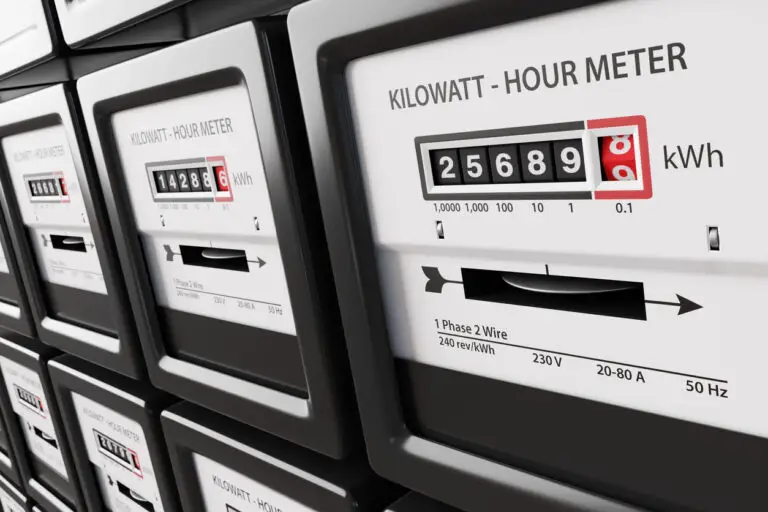
UK business energy prices have been elevated throughout 2026. In recent months, they’ve been pushing upward even further, heading into winter. September saw UK wholesale gas prices reach their highest level since December 2022.
For UK-based businesses, this means that supplier pricing remains expensive and looks to continue that way over the coming months.
Where UK business energy prices stand now
The current pricing varies by source – Aquaswitch.co.uk states that October 2026’s business electricity rates range from 27p per kilowatt hour (p/kWh) to 29p/kWh depending on whether your business is a big (100,000 kWh annual consumption), or a small business (10,000 – 50,000kWh annually). Other sources show rates that vary from 23p/kWh – 30p/kWh, again dependent on the annual usage rate.
Why UK businesses are more exposed to energy prices than households
UK businesses, particularly SMEs, are more exposed to energy price increases than households. This is due to households being protected by an energy price cap, while businesses are not. Additionally, many companies sign fixed-term contracts with their energy provider. Should the renewal date fall within a period where prices have spiked – this can result in the new rate being significantly higher than before.
There are also companies who will use more energy due to the nature of their business. Care homes, manufacturing, hospitality and retail businesses have high energy costs as their services require energy to provide. Businesses who are less reliant on heavy energy use will be less at risk.
The impact on SME cash flow and margins
With business energy prices increasing for everyone in the UK, SMEs are subject to higher overheads, which can lead to cash flow issues. Transport costs have increased, as have direct energy bills. With customers also being affected by energy costs, consumer spending might drop, adding to the issues businesses are currently facing.
One of Capify’s offerings, Cash Flow loans, supports businesses facing unexpected costs, such as an increase in energy prices. Loans from £10k to £3m are available to ensure your business can get through this uncertain period.
Sector specific impact
Manufacturing
With many businesses in the manufacturing sector being energy intensive, these are often hit hardest by severe price hikes. Companies who manufacture products are highly likely to fall into this category – they often rely on machinery to function. These could include food production, construction materials manufacturers, automotive businesses and many more.
Hospitality
Hospitality is a high energy use industry by nature. Kitchens require energy for various appliances; ovens, fryers, grills, fans and other appliances, require either electricity or gas to operate. There’s also lighting, air conditioning and heating to consider. These all require significant amounts of energy to keep running the entire time.
It’s also not as straightforward as just passing costs onto the consumer. They’re also feeling the pinch, so if prices skyrocket, people will consume less, or even worse, avoid going out completely.
Another consideration for hospitality is that margins are already tight – unexpected increases could potentially force a business to stop trading.
Retail
Retail businesses often struggle with significant cost increases for numerous reasons. Many of them have higher costs as they operate from physical stores. These stores need lighting, heating, security systems, displays and tills. All of which use electricity and therefore will be subject to cost increases.
Supermarkets and food retailers such as butchers, convenience stores, bakeries and many others, require a number of electric or fuel powered machines and devices. These are usually running 24/7, so with any energy price rises, there’s a drastic increase in costs, which can be difficult to pass onto customers. Since many retailers operate on quite thin margins, any increase in costs can remove a meaningful share of profit.
Some of the worst hit businesses are ones that have seen a drop in demand. Retailers of non-essential items; fashion, homeware, electronics and furniture, for example, can sometimes feel the pinch before others as consumers who are experiencing higher costs themselves, will cut those kinds of items first. This means some retailers may be facing higher costs and a decrease in sales.
Construction
One of the core parts of any construction business is materials. These are often energy intensive to produce, so the producers will raise prices, and these are passed onto builders.
Fuel costs also directly impact most construction businesses. Machinery, generators, earth moving machines and other vehicles, are all key components of construction businesses. With these all requiring fuel to operate, the businesses are directly affected by the increase in fuel prices.
Another issue facing construction companies, is that cash flow can be an issue even at the best of times. They’re required to pay for materials up front, yet payment from their clients often comes 30-60 days later. Businesses using fixed price contracts face even higher pressures as the increase in costs may not have been planned in.
Health & Care homes
Energy use in care home businesses is essential – they require heating which can’t be reduced, there’s round-the-clock electricity demands due to lighting, medical and mobility equipment, in addition to the kitchen equipment and IT systems.
Other equipment with high energy demands in care homes or businesses are hot water and laundry and catering. These are often places that have to cater to between 30-60 people, meaning demand for energy is always high.
Another issue for care homes is that with margins already squeezed and prices often quite high – there is little room to raise income. Knock-on effects of reducing services could affect care quality, which can have drastic outcomes.
Wholesalers
The effect on this industry is quite straightforward. Many wholesalers face increased costs due to the cost of their warehouses, transport and for businesses that require it, refrigeration and freezers.
Since wholesalers are operating on some of the thinnest profit margins of any sector, the impact could be much worse.
With warehouses, there can be increases in costs for lighting, heating, ventilation, security, conveyors, IT systems, forklift truck charging and many others.
An additional problem for wholesale businesses is that if customer demand reduces due to them having less expendable money, then they take a direct hit.
With price increases happening across many industries, wholesalers may be experiencing higher stock prices. This means more of their working capital is tied up in inventory. Combine this with reduced demand and customers paying on credit, and it’s easy to see why wholesalers might be struggling.
Government support: what’s available and what isn’t
There are a few schemes available to support businesses with energy costs. The British Industry Supercharger is a scheme available to energy-intensive industries. It cuts electricity costs by providing a 100% exemption from renewable levies, relief on 60% of network charging costs and increasing the exemption level provided by the existing Ell (Energy Intensive Industries) Exemption Scheme on Feed in Tariffs, Contracts for Difference and the Renewables obligation from 85% to 100%. The British Industry Supercharger supports around 370 businesses who collectively employ around 400,000 workers.
Another scheme that has been introduced is the British Industrial Competitiveness Scheme (BICS). This is another government initiative aimed at reducing electricity costs for eligible UK manufacturers. This scheme launches in 2027 and claims that it will reduce electricity costs by up to £40 per megawatt hour for manufacturing businesses within the Industrial Strategy’s growth sectors (the IS-8) and foundational manufacturing industries. These businesses must meet the relevant electricity intensity threshold to be eligible.
Practical steps to reduce energy costs
With many UK businesses facing financial challenges due to energy price rises, what can they do to protect themselves?
Government support exists for certain businesses, such as BICS and the British Industry Supercharger mentioned earlier. While these schemes are targeted at Manufacturing businesses and Energy Intensive Industries respectively, it signals that the government are trying to support businesses with rising energy costs.
Getting your energy contract right is something SMEs should strive for as they typically pay some of the highest unit rates for energy according to the University of Bath’s report. Also mentioned in the report is that the government’s June spending review excluded any new funding to support SMEs with improving their energy efficiency or renewable energy installations.
There are smaller changes that could be explored, these could provide relief from rising costs:
- Understanding your energy usage better by installing smart or half-hourly meters
- Replacing old lights with new, LED lighting with sensors.
- Basic maintenance such as fixing air leaks or draughts.
- Turning off machinery when it’s not in use.
There’s also the option of taking out asset finance to perform bigger upgrades, like using more efficient motors/boilers, improving insulation, or installing heat pumps and solar. Small schemes and grants exist to support this, such as the Boiler Upgrade Scheme. This covers part of the cost of replacing fossil fuel heating systems with a heat pump or biomass boiler.
EDF Energy and Enterprise Nation have also joined forces to create ‘Powering Local Businesses’ – a grant of £1,000 to help small businesses make meaningful upgrades and become more resilient. 25 small businesses with fewer than 50 employees and at least 12 months of trading history will be provided with the grant, providing them with some additional funding to increase their energy resilience.
How business finance can help
How can Capify help SMEs based in the UK? We offer a range of financial products that businesses can use for upgrading their equipment, performing maintenance and upgrades, or just to cover a cash flow gap. As we are not a bank or main high-street lender, we can also move quickly and potentially offer finance to companies that may have been refused elsewhere.
Some of Capify’s products that can support SMEs with the UK business energy prices rise include:
Our asset finance product is for businesses who are looking to finance some equipment, a vehicle/vehicles, machinery or other business assets.
Our cash flow loans are for businesses that are looking for a loan to cover unexpected costs, operational disruptions or delayed income. This gives businesses an option during times of unforeseen pressure.
Capify’s small business loans provide an option for companies who might be looking to scale, purchase large orders of stock or recruit. They can also be used for business technology, refurbishment and renovation
Capify’s unsecured loans are perfect for businesses that are either looking to manage their cash flow, cover expenses, fund marketing activities, purchase stock or seize sudden opportunities.