There are few sectors that have faced as many challenges as hospitality over recent years. Since the pandemic, it has continued to battle numerous headwinds from staffing shortages and spiralling energy and ingredient prices through to supply chain disruption. However, there’s evidence that the sector is approaching 2024 with renewed optimism as demand continues to improve and inflationary pressures start to subside.
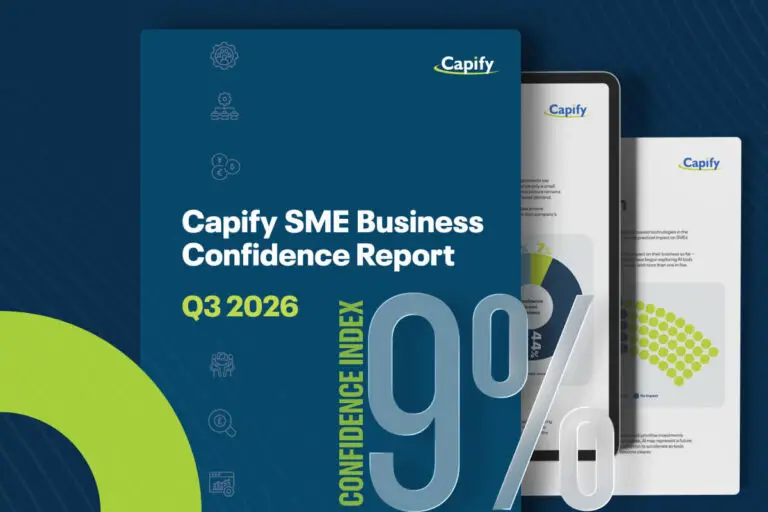
Business confidence in UK SMEs remains at historically low levels, according to the Q4 2023 survey from alternative finance provider Capify. Released in January, Capify’s SME Business Confidence Survey revealed that overall business confidence remains at its lowest level since Q4 2022, with smaller business owners grappling with ongoing financial, market and staffing challenges.
Only 45% of respondents revealed turnover growth in the past three months, a 4pp drop quarter-on-quarter. At the same time, just 40% of businesses reported a growth of profitability in the same period. These findings reflect an ongoing sense of unpredictability and difficulty in accurately forecasting future business performance. Indeed, 40% of respondents reported that they were operating behind their targets for the final quarter, whilst only 25% felt they were ahead of where they expected to be for the period.
Produced quarterly, the Capify SME Business Confidence survey canvasses the insights of hundreds of SME business owners from across the UK on areas of current business performance, trading forecast and investment intentions. It uses the data to produce an overall confidence score between -10 (very unconfident) and +20 (highly confident). The confidence score now sits at -4.10, a 0.10 point drop from the prior quarter or 6.03 points below the rolling quarterly average.
Staffing shortages
The hospitality industry has always been reliant on the supply of skilled and unskilled labour, often at short notice. But this has become increasingly unpredictable in a post-Covid and post-Brexit environment – meaning suitable candidates can be hard to come by.
“The biggest challenge in hospitality today is staffing,” says Mick Jary, Specification Director at Meiko UK. “Employees are looking more for the ‘package’ that reflects the hours and working conditions commonly found within the industry.” This means the onus is on employers to invest in key roles, providing better pay and conditions and therefore providing a career path for less qualified staff, he adds.
Volatility in workforce supply also has several implications for cash flow. As well as the costs of additional hiring and training, overtime might need to be paid to maintain roster consistency and any perceived change in service quality could impact repeat custom. And, if difficult conditions adversely affect the working environment, then staff morale can be impacted and the chances of industrial action may be increased.
The upcoming minimum wage increase is just one of several new rules and regulations being rolled out in 2024. And many of them vary across the nations and regions according to this guide from Pinsent Masons.
High input costs
All businesses in the UK have felt the impact of high energy costs but the hospitality sector is clearly limited in the ways it can streamline usage without directly affecting service levels. One potential solution is to invest in equipment that is more energy-efficient or to take the strain off the national grid by deploying renewable sources such as solar.
Furthermore, the entrenched period of high inflation irrevocably pushed up the prices of food, beverages and other commodities for SMEs.
Value for money
This growing resilience to a new ‘operating normal’ has not yet translated to an increase in investment intentions though. Overall, the number of areas in which respondents were looking to invest has decreased slightly quarter-on-quarter. On average, SME owners are looking to commit to 1.83 investment activities or areas in the next 12 months. This is a small decrease on the previous quarter, where owners expected to be funding 2.55 separate investment areas. Continuing the trend of a cautious approach to any recovery, the amount SMEs expect to commit to these investment areas has also fallen from £44,659 in Q3 2023 to £21,169 in Q4.
John Rozenbroek, COO/CFO at Capify, said: “Our most recent survey findings will come as no real surprise to anyone who runs, or works with, an SME. The trading continues to be incredibly challenging and, after several year of facing headwinds, there is a palpable sense of fatigue in the SME community:
“The survey results emphasise how challenging it is to accurately forecast in periods of uncertainty and the impact that has on meeting targets. We also see, again, the detrimental impact late payments have on smaller businesses. Both of these factors can have a hugely negative effect on company cash flow”
Future trends
It’s not just the balance sheet that the hospitality industry is keeping across. At the SME level, the success stories are often built on agility and innovation. This can range from investment in new technologies – from automated booking systems through to new kitchen kit – right down to reinventing what’s served on the plate. Fundamentally, the investment needs to be carefully tailored to the business model.
Customer preferences also continually evolve – and competitive edge is the prize for those who are able to react and adapt. From the hotel that authentically lives its sustainability story; to the restaurant that constantly pushes the boundaries; to the venue that offers unique and intimate customer experiences; hospitality businesses that focus on service and have a pragmatic mindset are also likely to have the resilience to overcome any unexpected bumps in the road.
And despite the uncertainty that a general election year can bring, there is plenty of optimism in the market. The Caterer points to the relative buoyancy of the UK hotel sector after a report showed 2023 profits exceeded pre-pandemic levels. Meanwhile, according to, 67% of SMEs in the hospitality sector expect revenues to grow this year.
With signs that the recent issues impacting the sector are easing, many operators are looking to a better year ahead. With confidence returning, the hospitality sector is preparing to capitalise on energy-efficiency opportunities, more stable input costs, better supply of staffing and higher levels of consumer spend.
At Capify, we’ve been helping businesses for over 15 years invest in the future. Capify offers a unique business loan aimed at owners in the hospitality industry. The hospitality loan is paid back in small, manageable and frequent amounts rather than monthly. Check to see if you’re eligible for one of our loans with our online eligibility checker. Or, if you’d prefer to talk to a member of our team, we’d be happy to guide you through the process. Give us a call today on 0800 151 0980.