After a difficult 2022, trading conditions for UK businesses are set to be even more challenging in 2023. Official forecasts indicate that the economy will remain in recession for much if not all the year. We collate the insights from a range of experts on what businesses can expect in the year ahead.
Need to know summary
- Inflation has likely reached its peak, but cost pressures and high interest rates will continue well into the new year
- Rethink your longer-term pricing strategy and avoid incremental increases in your market price
- Look at efficiencies in your operation to protect margin
- Rethink your sales targets and think in terms of market share
- Reconsider your marketing and sales-generation process
- Keep a close eye on supply chains and model impacts of disruption and price rise
- Look for opportunities in failing competitors
- Make cost management and cash flow forecasting part of your daily routine
- Consider alternative providers for short-term or longer-term finance requirements
Recent figures suggest inflation may have reached a peak in November, but price rises are still running at significantly higher levels than in recent decades. Different sectors are facing varying degrees of impact from rising prices. Food and drink producers are among those at the sharp end, with inflation in the sector hitting 16.5% in November. Food and Drink Federation chief executive Karen Betts says: “Manufacturers continue to see persistent rises in their key costs – from ingredients to logistics, packaging, and labour. Energy still accounts for a significant portion of companies’ costs, and we are seeking urgent clarity from government on what energy support will be available to the food and drink supply chain in the spring.”
Alpesh Paleja, lead economist at the CBI, says: “The fall in inflation last month supports our view that we’ve likely passed its peak. Despite this, costs and price pressures will likely remain very high in the near-term, putting continued pressure on vulnerable households
and businesses. Government support has been considerable already, but with the UK set to fall into a recession, targeted measures must be extended to those that need them most. In particular, businesses need clarity on a targeted extension to the Energy Bill Relief Scheme, which should be aimed at supporting heavy energy users.”
In an attempt to reduce inflation, Interest rates continue to rise, with the Bank of England increasing the base rate to 3.5% in mid-December and planning further hikes in 2023. Accordingly, the cost of borrowing has increased, whilst the availability of finance from many banks has reduced.
Against this backdrop, it is vital that businesses prepare themselves to cope with the downturn, while also ensuring they are well placed to benefit from the return to growth, whenever it comes.
So, what can SMEs do to prepare for the next year of turbulent trading?
1. Get a grip on inflation
Recent research from the Federation for Small Businesses (FSB) suggests that inflation remains the number-one headache for small and medium-size enterprises (SMEs), with soaring energy costs the main cause. An FSB spokesman says: “Profit margins are reducing, and now thanks to inflation many businesses are spending more on overheads and every day running expenses to continue trading, as the cost of doing business rises in line with the cost of living. You need to find alternative ways to balance profit margins, so you don’t end up relying on raising prices over the level of inflation to make a profit.”
Passing on some direct input cost increases to your customer and clients is likely to be necessary for a number of SME owners, but this might be an opportune moment to review the overall pricing strategy of your business (Pricing strategies in period of inflation).
The organisation recommends investing in new technology where possible to streamline processes and making them less expensive to run, as well as carrying out an energy audit to help identify wastage. The spokesman adds: “To face rising costs head on, seeking alternative finance to help fund gaps in working capital, or to provide some financial stability, is by far the most effective option.”
2. Learn from the past to boost sales
Paul Owen, boss of marketing consultant Sales Talent, says that earlier downturns can provide insight into how to deal with the current slump. “There is plenty we can learn from the credit crunch and from previous recessions when it comes to operating a business in a tough economic climate,” he explains. “The way companies manage their sales and marketing teams, for example, can have a huge impact on how they weather the financial storm.”
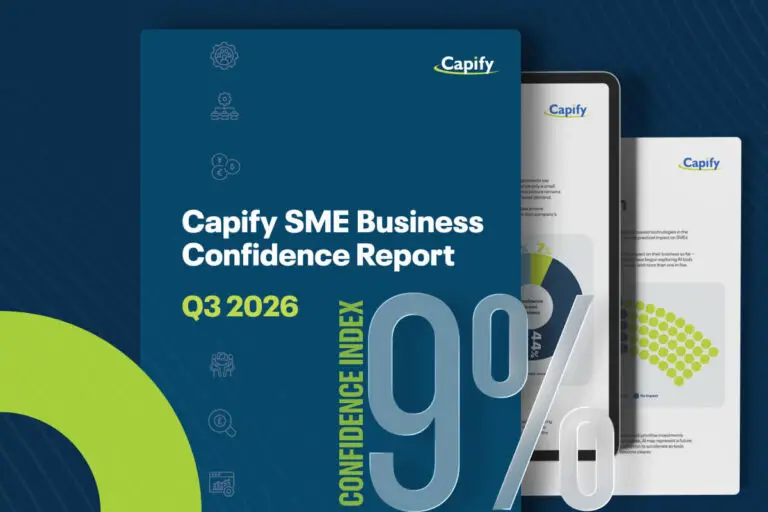
With the Capify Q3 Business Confidence Survey revealing that 46% of SMEs were currently trading behind their targets, Owen recommends switching to “market share, not targets” when it comes to sales. “Teams that are focused on getting new eyeballs on their brand can be inspired to innovate and create,” he says. “Those feeling beaten down trying to achieve unrealistic, pre-recession targets, however, are unlikely to perform at their best. And now is
the ideal time for firms to revisit their lead-generation and conversion strategies. Are opportunities being missed when it comes to finding new business? Is everything possible being done to convert new leads into paying customers? Any work that can improve this process will pay dividends both during a recession and after.”
3. Keep an eye on supply
With costs rising and shortages still being felt across the economy, small firms need to make sure they know exactly what’s happening in their own supply chains, says Kirsty Braines, chief operating officer at business transformation specialist Oliver Wight. “It can be useful to develop extended supply-chain assumptions to project how incremental costs may be passed downstream onto clients and consumers,” she explains. “Ensure you include inflation and currency assumptions in your short-term projections and review them on a monthly basis so long as disruptive business conditions continue.”
Braines adds that companies should investigate shortening their supply chains and potentially moving away from a reliance on imports given their vulnerability to currency fluctuations.
On the flip side, the relative weakness of the pound may provide an opportunity to consider new export markets for your business (Exporting tips for SMEs)
4. Get ready to take opportunities
Businesses should not be in pure fire-fighting mode, says Rick Smith, managing director at consultant Forbes Burton. “Despite the pressures, there are many opportunities that may emerge: for example, there will be a lot of businesses that don’t survive because they aren’t prepared so there will likely be opportunities for those willing to take some risk and fill the gaps where others fall.”
With this in mind there may even be opportunity for mergers and acquisitions within your direct competitive set.
Smith adds that resilience is borne from a disciplined and regular approach to key financial information: “To see themselves through, firms need to make sure they are forecasting cash flows, keeping an eye on expenses and planning scenarios with actionable milestones. There needs to be trigger points for actions identified and then kept to.” Smith says that firms should ensure they continue their marketing activity throughout the downturn. “Many businesses look to slash their marketing budget as soon as costs get tight, but research has shown that the companies that keep marketing emerge stronger after a recession or downturn – usually ahead of their competitors.”
It is highly likely that trading conditions will get worse before they get better for UK SMEs in 2023. However, being aware of the challenges ahead will help businesses be as prepared as they can be for dealing with them.
At Capify we offer a range of business loans to help support your business through high and low periods. Check to see if you’re eligible for one of our loans with our online eligibility checker. Or, if you’d prefer to talk to a member of our team, we’d be happy to guide you through the process. Give us a call today on 0800 151 0980.