Ignorance might mean bliss, but on ESG ignorance is unaffordable. According to Capify’s research, some 56% of small business owners are not fully familiar with the term ESG. This is understandable given that to date it’s mostly large corporates that have had to engage with it. But times are changing, as support and interest in the recent COP26 summit illustrated. To recap, ESG stands for Environmental, Social and Governance – but spelling this out that only begs the question: what really is it and how does it relate to my business?
According to authors (https://corpgov.law.harvard.edu/2020/08/01/introduction-to-esg/) from Harvard Law School “ESG, at its core, is a means by which companies can be evaluated with respect to a broad range of socially desirable ends.” Put more simply, it’s about a business having a more meaningful, good outcome than making money for its owners or employees. For instance, a widget maker would adopt ESG if it tried to minimise the risk of injury to its workers, made donations to local community groups and tried to operate in as energy-efficient way as possible.
Indeed, such is the desire among workers, investors and customers to see companies embrace an ESG approach that not doing so risks a business’ ability to operate and, ultimately, earn money. Your staff are likely to leave for employers that operate more sustainably or ethically, customers will choose suppliers that do the same, and investors are putting pressure on companies to make ESG considerations too.
At present it’s mostly large companies that face this pressure, either through market forces or a regulatory standard such as the requirement to include certain statements in their annual reports. However, as the world moves towards fulfilling the commitments for Net Zero – operating without producing an excess of greenhouse gases – over the coming decades medium-sized and small businesses will have to look at ESG, and the E in particular. As we’ve explained before, corporates are also looking at emissions in their supply chains, meaning smaller businesses they have a relationship with need to address ESG as well.
While approaches to ESG may change, a typical focus under the three headings is:
Environment
Amount of greenhouse gas emissions
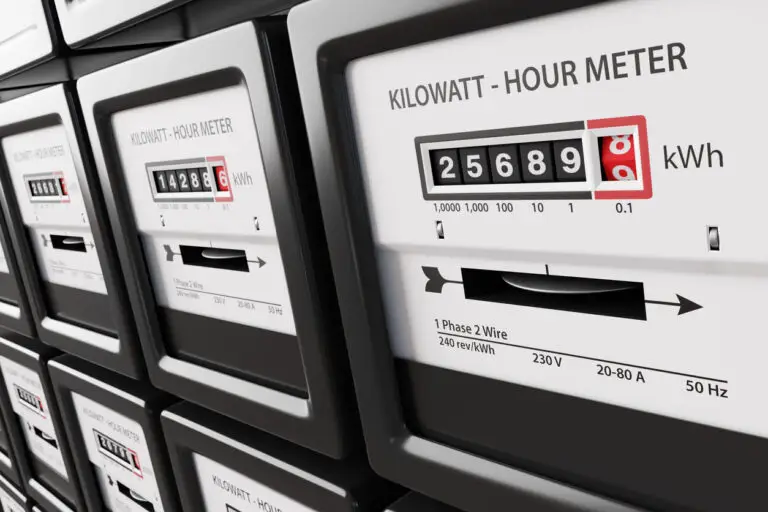
Amount of energy used
Amount of waste generated or plastic used
Social
Employee turnover
Health and safety incident rates
Number of data breaches
Governance
Diversity on the board
Percentage of equity owned by the board
Fines or litigation related to business ethics
How might ESG affect my business?
The main thing to note is that taking ESG seriously will take time to learn its intricacies, and will most likely mean making long-term investments that improve the ESG output of your company – and that drive the financials.
Given the acceleration of climate change, the environmental element of ESG has taken centre stage in 2021, and may do in 2022. As we have discussed before, investing to lower your carbon footprint is a relatively straightforward journey to start. But as your business grows, and over time your workforce becomes younger (and more conscientious about the good their employer does) investments are likely to be more about processes and reporting than assets that are better for the planet.
For instance, becoming part of an accreditation, such as the Certified B Corporation movement, will demand that you show credible evidence about what you claim on metrics such as energy usage. So investments might switch from acquiring energy efficient lightbulbs and low-energy printers, to software (or software as a service) that can accurately track energy consumption alongside other data in a dashboard. Other examples include training for staff (including leaders) on how to embedding environmentally sustainability in the business, hiring a consultant that can design a Net Zero action plan, or indeed, hiring a chief sustainability officer who makes ESG integral to your strategy. And then there is making the most from the good of going green: designing subtle marketing messages that let customers know you are ESG focused, as well as engaging staff and keeping their enthusiasm.
This might sound like hard work, but bear in mind one thing: according to our research 60% of SMEs won’t have ESG policies in place for 2022, meaning that those who do will likely differentiate themselves among customers and have more engaged staff. In short: the hard work will pay off.